The Fallen One: Why Anakin Skywalker Was Not Evil at Heart
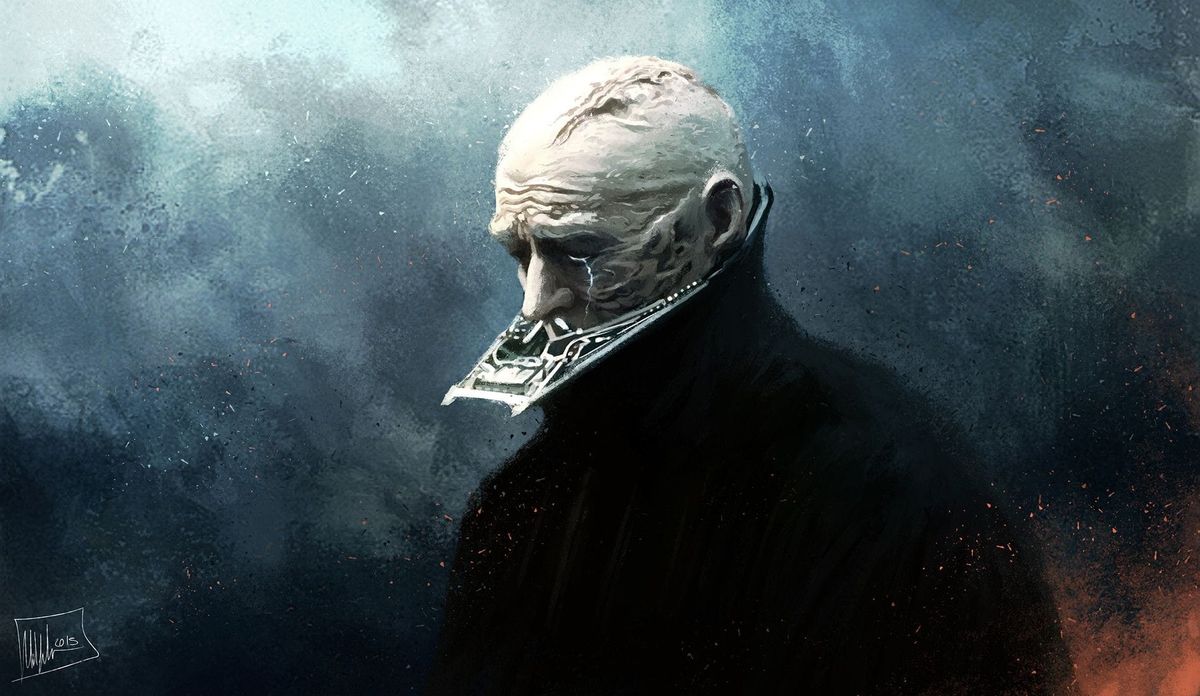
Caught between fear, love and manipulation, Anakin Skywalker loses his balance – and becomes the most tragic figure in the galaxy. A psychological and philosophical analysis of his fall and of his late return to his own humanity.
Abstract
This essay examines whether Anakin Skywalker is truly “evil” – or rather the product of love, loss and manipulation. Drawing on Fromm (authoritarian bonds), Jung (the shadow) and Freud (id and superego), I argue that Darth Vader does not act out of conscious malice, but out of emotional overwhelm. Conclusion: it is not malice that drives him, but love – which, in him, becomes the source of the greatest suffering.
For context: This text assumes familiarity with the Star Wars saga and reflects my personal view, based on my understanding of human nature.
My core thesis: Anakin Skywalker was never truly evil. Even as the terrifying Darth Vader, I would not call him “evil” – let alone “bad.” Evil is Emperor Palpatine. In his case the description fits like a glove. The Fallen One, on the other hand, acted cruelly and did terrible things, but not out of evil intent. His motivation was love and loyalty. That doesn’t make him innocent, but it makes him human. Let me explain:
Episode I – The Boy
We meet Anakin as an innocent child with great potential. He has spent his whole life as a slave on the desert planet Tatooine. He has grown used to it, but it is not the life he dreams of. His relationship with his mother, Shmi, is loving and close. By nature he is caring, spirited and courageous – fine qualities. Looking at young Ani, we would not expect cruelty from him. We don’t learn much more about his psyche in Episode I, but this first impression counts: he is a good boy.
Episode II – Longing and Loss
Ten years later, the young Jedi takes shape. Still in his teens, he goes through enormous inner growth, above all emotionally. From the first moment he met Padmé, his thoughts have been with her constantly. In this episode he spends time alone with her; strong feelings arise, and a deep bond develops – one that will still set a great deal in motion.
At the same time, longing for his mother pulls him back and forth. Haunted by visions of Shmi’s suffering, he returns to Tatooine after years away, only to hold her as she dies in his arms.
Devastated. His whole world collapses in his arms, and there is nothing he can do about it. His despair turns into rage, directed at those who caused his mother so much suffering. The apprentice flies into a fury and takes revenge: he kills every single Tusken Raider in the camp – men, women, children.
Is that evil? Or an understandable instinct? Killing for the sake of killing can clearly be called evil. But something else is in the foreground here: he kills because he finds no other way to deal with his powerlessness. Does that make him evil as a person? I don’t think so. We see how strongly Anakin is driven by his emotions, how much they shape his decisions – and above all: how much power his feelings have over his actions. All rationality deserts him when he sees the people he loves suffer. This is his pattern, and it will run through his entire life: emotion overrides reason – not out of malice, but out of being overwhelmed.
Episode III – The Transformation: Guilt, Fear and Authoritarian Bonds
This is where the change from Anakin Skywalker to Darth Vader takes place. It doesn’t happen overnight. It began early, when young Ani left home and said goodbye to his mother.
Throughout the third film we see Anakin’s desperate fear for Padmé. And we see Palpatine working on the already torn young man, gently at first, then with ever more intense manipulation. Palpatine embodies what Erich Fromm describes as an authoritarian bond: a figure who promises security while undermining the individual’s autonomy. The Fallen One has lost his mother and blames himself – he, who wants to become the greatest Jedi of all time, could not save her. Under no circumstances will he now lose Padmé as well.
Here lies the paradox: Anakin knows he is doing evil. He senses that he is violating everything he learned as a Jedi. But he cannot stop. Why? Because his fear of loss is greater than his moral judgment. What C. G. Jung describes as the “shadow” – those repressed, dark parts of the personality – manifests in him as an uncontrollable driving force. Freud would say: the id (drive, desire, love) floods the superego (the moral authority). Jung’s shadow appears as the repressed part that takes the helm. The apprentice is so emotionally overwhelmed that his psyche collapses.
When he becomes Darth Vader, his main thought is that this will let him save Padmé. That is his only goal, and so he begins to carry out Palpatine’s orders without hesitation – all out of love. The slaughter of the Jedi in the Temple, the killing of the younglings who had only just looked up to him – horrific, cruel deeds. These deeds mark the moment in which emotion finally overrides reason – not out of malice, but out of emotional dependence and self-hatred.
He is blind with love, blind with despair, obeying the one person he believes can help him save the one he loves above all else. How many of us would do anything to protect the people we love? I recognize in Anakin a fundamental goodness, and I see in his actions behavior that is humanly understandable. This is not a justification – it is an explanation.
In the duel between Vader and Obi-Wan, the pent-up pain explodes. The Fallen One hates his former master, because he believes he has found in him a new enemy who wants to take Padmé away from him. When he says “I hate you,” those words come from a place of the most extreme emotional pain and the deepest confusion. It is the scream of a dying man, not the cold threat of a monster.
Shortly afterwards, we see in Palpatine the embodiment of true evil. After he brings Vader to him and puts him into his suit, he confronts him with a brutal revelation: Padmé is dead – and Vader himself is to blame. A desperate emotional outburst follows. The Fallen One screams and makes the room shake through the Force. And we see: Palpatine smiles with relish. He has reached his goal. He has secured his grip on one of the most powerful beings in the universe. He savors Vader’s loss; he laughs at the thought that so many have died for his victory. That is evil through and through. Palpatine’s intentions were never good.
One final transformation takes place in Vader: he has lost everything that was dear to him – his wife, his friends, his life as a Jedi. Everything he knew and everything that meant something to him is gone. And he thinks all he has left is Palpatine – the man who was there all along, from the very beginning. That is the last step in the complete transformation from Anakin Skywalker to Darth Vader. Every tie to his old life is broken. What remains is not someone who carries evil within him, but someone who is loyal to the only person he still has.
Episode IV – The Emperor’s Puppet
Darth Vader presents himself as the ultimate villain. He hunts rebels, threatens his subordinates for disobedience and enforces his Emperor’s orders with iron severity. The Fallen One has become someone who no longer thinks back to his old life. For almost two decades he has been the Emperor’s puppet; his identity holds nothing else anymore. A spark of old memories flickers when he fights Ben Kenobi, but it isn’t enough to stir him emotionally. The old Anakin seems dead.
But when, toward the end of the film, he notices another presence – he senses Luke Skywalker – something stirs in him again after a long time. Something buried. Something he believed was lost forever.
Episode V – The Son
Darth Vader changes in great strides. His highest goal now is to track down Luke. Ever since he found out that his son is alive, he has begun to remember his time as Anakin. He perceives feelings he hasn’t felt in a long time. He once again has an emotional connection to someone, simply because it is his child.
When the two meet, the father has no intention of killing Luke. Vader has killed countless Jedi, but with this boy he hesitates. Instead of striking him down, which he could have done with ease, he offers him a chance and holds out his hand – just as Palpatine once did to him. This time, though, it is an offer made out of affection, not a cold-blooded plan. He wants to give his son the opportunity to join him in the only thing he has to offer: the dark side of the Force. Being a Sith Lord is all Vader still knows, so that is what he offers his child.
Luke is devastated by the news. But as he thinks it over, he recognizes something: Vader himself is beginning to see that he may not be the evil figure he appears to be. Little by little, very small pieces of the old Anakin come to the surface. For just as the path to Darth Vader took a long time, the change back to Anakin Skywalker also begins slowly and in small steps.
Episode VI – The Return
At the end of the original saga, we can follow the final transformation. The Fallen One is ordered by Palpatine to bring Luke before him, but he has motives of his own. He begins to feel fatherly affection. Even so, he tries to deny that his former name, Anakin Skywalker, means anything to him. Because change is hard. How could he move from his existence as a feared Sith Lord into the role of a father? An impossible change of sides. Vader tries to hide every feeling, from the outside world as much as from himself – for they had long been foreign to him, too.
The final duel between father and son marks the great turning point. Once again we see the Emperor trying to manipulate Luke and win him over to the dark side – not out of affection, but because he knows that Vader is growing old and that he will soon need someone new.
As the two fight, another revelation reaches Vader’s mind through Luke’s thoughts: he has a daughter. It strikes him like lightning. He has not one but two children! Two links to his lost love, Padmé. The feelings overwhelm him, and it becomes harder and harder to fight them.
Palpatine and his manipulations were what brought Vader enormous power – and what ultimately destroy him. We watch the Emperor torture Luke after Luke refuses the dark side. We hear Luke’s cries for help: “Father, please!” And despite his rigid mask, we recognize in these moments the great inner conflict in Darth Vader: should he remain the loyal servant of the man who was always there? Or should he help the one who is part of himself, part of Padmé, whom he loved so much?
Since first learning about Luke, the Fallen One has gone through so many inner changes. Now the moment has come: Darth Vader no longer exists. Anakin Skywalker lifts the Emperor up and hurls him to his death. The return to his true self is complete.
What Is “Evil”? A Clarification
When I say “evil,” I mean conscious malice – actively wanting destruction as an end in itself. Palpatine embodies this: he relishes the suffering of others; he plans destruction out of pure lust for power. Vader’s problem is a different one: not the will to do evil, but the collapse of judgment under manipulation and fear.
The Counterargument
Objection: Anyone who kills younglings is acting evil – period.
Response: The deeds are undoubtedly evil. My thesis, however, distinguishes between deeds and inner disposition. Vader’s actions do not spring from a desire to destroy, but from a pathological narrowing caused by fear, guilt and attachment-based dependence. That explains – it does not excuse.
Conclusion: The Good in Him
It was a long, rocky road along which many terrible things happened. But despite these mistakes, despite all the cruelty, Darth Vader was never a truly evil character. He was never driven by evil ulterior motives or a greedy hunger for power. His motivation was always love and loyalty – two things we consider virtues, but which in him became the source of the greatest suffering.
He knew he was doing evil. He felt the guilt. But he could not stop – trapped in a vicious circle of fear, self-hatred and emotional dependence on Palpatine. That does not make him innocent. But it makes him deeply human.
And it is precisely this good in him that brings him back to the light side in the end. Not the Force, not the teachings of the Jedi, not the Rebellion – but his love for his son.
He was never innocent. But he was never lost, either. With his last breath, he was once again what he had always wanted to be: a person who loves.
Originally published in German as “Der Gefallene: Warum Anakin Skywalker nicht grundböse war”. English version by Dorian Rammer, translated with AI assistance.
Even a small donation helps me set aside time for writing. Thank you.
Warm regards
Dorian Rammer