
The Picture of Dorian Gray: A Mirror of Guilt and Desire
A revised review – more than ten years after it was first published. On beauty, guilt, queer identity and the abysses Oscar Wilde made visible – and that live on in all of us.
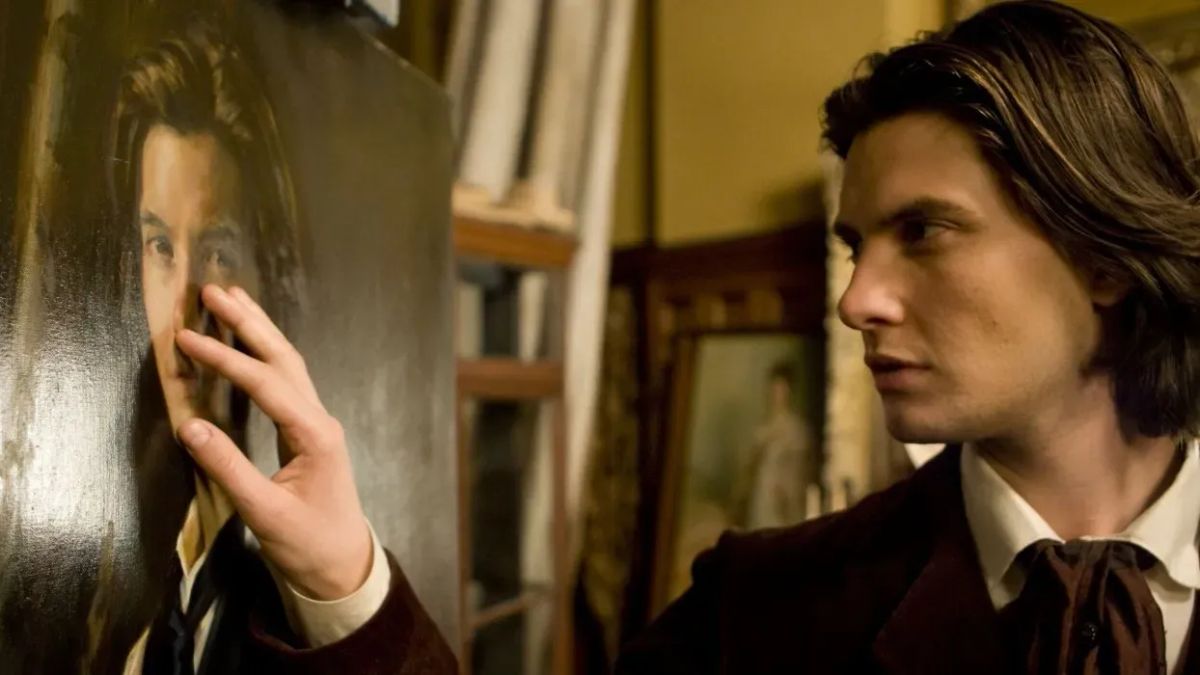
I originally wrote this review during my apprenticeship in a bookstore – back then still with youthful admiration for Oscar Wilde, and without any idea how closely the character who shares my name would one day accompany me.
For this new publication I have revised the text and added thoughts that seem essential to me today – more than a decade later.
The Story of a Decline
For the painter Basil Hallward, who moves in London’s high society, young Dorian Gray embodies the muse who helps him reach his full artistic potential – a perfect showpiece of youthful innocence, beauty and sincerity.
Basil’s hedonistic friend Lord Henry, on the other hand, sees in Dorian a wonderful chance to fulfill himself as a mentor and to mold him according to his own ideas.
While the dazzled Basil showers him with compliments and expresses his newfound passion with unprecedented finesse, Lord Henry unsettles Dorian with his paradoxical philosophies. Step by step, he claims the young man’s mind for himself – a form of manipulation, elegantly wrapped in philosophical discourse and aesthetic theory.
When Basil, at the peak of his artistic life, paints a lifelike portrait of Dorian and Dorian stands before the finished work, no one suspects the horror to come.
Dorian shudders at the sight and, full of delight, utters a fateful wish: may he always remain as young and beautiful as in this portrait, and may the picture grow old instead and bear the burdens of life.
His prayer is mysteriously answered. Poisoned by Lord Henry’s bad influence, Dorian falls more and more victim to his inner abysses.
Outwardly he remains flawless. Only he knows the terrible mirror of his soul – the hidden portrait in the attic that carves every misdeed, every excess into its features.
Between the Lines
The theme of homosexuality resonates, veiled, throughout Oscar Wilde’s only novel. Much of it revolves around male beauty and youth, the dubious morality of Victorian society, hidden sins and feelings of guilt.
A few years after its publication, Wilde himself was convicted of “gross indecency” – a fate that already seems foreshadowed in the novel. Hiding the portrait in the attic can be read as a metaphor for hiding queer identity, for the shame a repressive society imposes on you.
To this day, The Picture of Dorian Gray is one of the most interpreted works of the 19th century – from theological readings to psychological and queer ones. With Dorian, Wilde created a character who works as a mirror for his readers: each of us sees something different in him, often what we are trying to repress.
The novel’s language is not exactly the easiest. But once you have read your way in, you are swept along by the plot – and by the biting irony with which Wilde exposes the hypocrisy of his time.
Personal Connections
My connection is perhaps not too hard to guess: I know from my grandmother that my mother chose this very name after reading The Picture of Dorian Gray. Why remains an open question.
In any case, I like my name – even if I sometimes wish I knew the answer to that “why.”
Perhaps that is also why the novel fascinated me so early: because it describes the conflict between outer perfection and inner turmoil – a theme that has stayed with me to this day.
Unlike back then, I now know the dark sides of this inner conflict from my own experience. Years later I experienced how easily you can get lost in the search for recognition, for beauty, for control – and how painful the confrontation with your own reflection can be when you no longer know whom you are actually facing.
Today I no longer see only an abyss in it, but also insight – because every breaking apart holds the possibility of taking a new shape.
In this sense, Wilde’s Dorian has long ceased to be a mere fictional character for me; he is a projection screen for human abysses – my own included.
He reminds me that what we hide does not disappear; it only changes shape until we find the courage to look.
I especially like the passages in which Dorian and Lord Henry talk about the philosophical foundations of life, the groundlessness of society’s moral conventions and the possible unbridled pleasures of existence.
I find the views of the two fascinating – partly because they are dangerous. The dialogue form gives the book a very special intellectual flavor.
To others, these passages may seem somewhat long-winded, which is understandable given the length of the conversations. When I first read the novel, I sometimes skipped them. I would not do that today.
It is precisely in these seemingly idle conversations that the real seduction lies: Lord Henry’s poison does not work through crude commands, but through elegantly phrased half-truths.
Atmosphere and Abysses
I like the novel’s atmosphere, the era in which the story is set, and the protagonist’s mysterious double life.
On the one hand, Dorian plays the fine gentleman who can hardly escape the unusual affection of women. On the other, he lives out his dark passions – indeed, he even becomes a murderer.
Wilde writes with the precision of a dramatist and the poetry of an aesthete: every scene is heightened, every description worth quoting. Between London’s glamorous salons and its dark attics unfolds a moral drama that has hardly aged.
This double life, this gap between outer flawlessness and inner decay, has something deeply human about it. Wilde shows how hedonism and moral irresponsibility lead not to freedom but to destruction – first of others, then of one’s own soul.
The portrait becomes the physical manifestation of a guilt that cannot be repressed.
Lasting Impact
Perhaps the novel’s lasting effect also lies in the fact that it exposes the eternal human need for purity and self-justification – and the pain that follows when both remain out of reach.
Hardly any other novel has inspired as many reinterpretations as The Picture of Dorian Gray: from film noir to pop culture to queer theory.
It remains a moral experiment – and a question every generation has to answer anew:
How much truth can beauty bear? And how much guilt can a person repress before they break?
Conclusion
The Picture of Dorian Gray is more than a Gothic novel or a moral parable. It is a psychological portrait of self-destruction, an indictment of social hypocrisy and an encoded queer narrative.
Wilde wrote a novel that unsettles and fascinates to this day – perhaps precisely because the questions it raises do not allow simple answers.
More than ten years after I first wrote this review, the novel remains relevant to me.
Not only because of my name. But because it tells of the masks we wear – and of the price we pay when we wear them too long.
Originally published in German as “Das Bildnis des Dorian Gray – Spiegel von Schuld und Begierde”. English version by Dorian Rammer, translated with AI assistance.
Even a small donation helps me set aside time for writing. Thank you.
Warm regards
Dorian Rammer