The Greatest Teacher, Failure Is
Yoda teaches that failure is not a flaw but material to learn from. This essay connects Star Wars, statistics and personal experience – on learning from mistakes, looking at what stays hidden and the strength to grow from the places where we break.
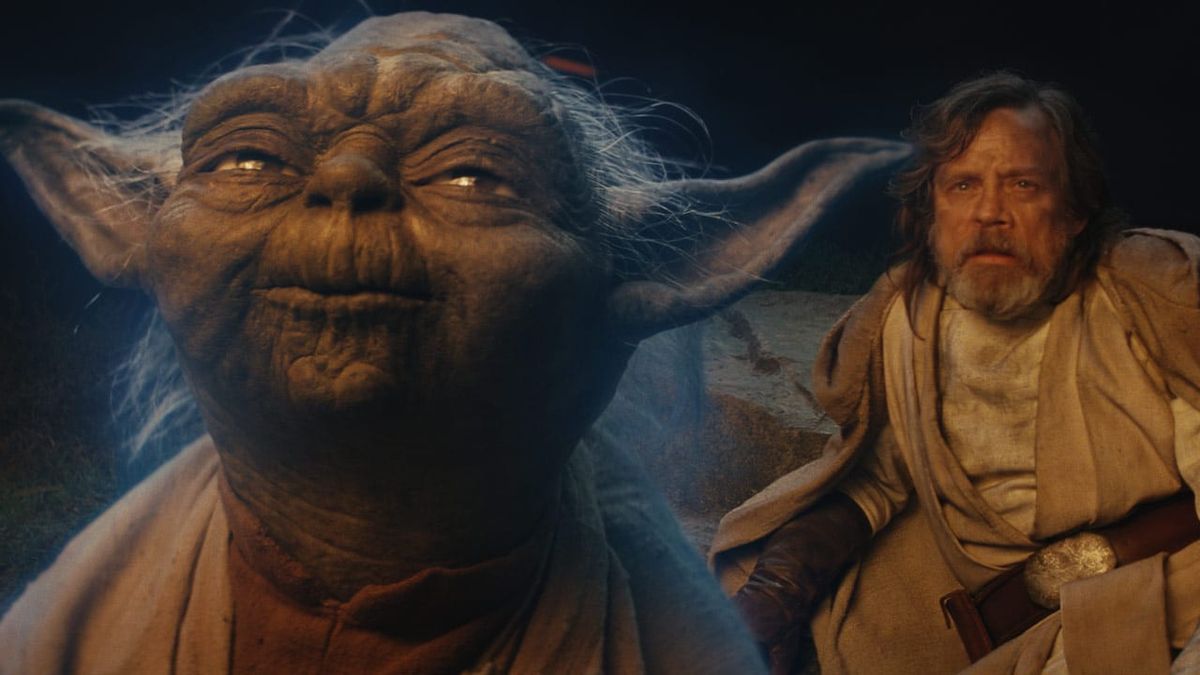
“Pass on what you have learned – strength, mastery… but weakness, folly, failure also. […] The greatest teacher, failure is. Luke, we are what they grow beyond. That is the true burden of all masters.”
– Yoda to Luke Skywalker, The Last Jedi
This scene fascinated me. Not because I am a Star Wars fan, but because in 90 seconds Yoda says what no one had ever really told me before:
Failure is not a glitch, not the end of the world – it is the basic condition for growth.
In the film, Luke stands before the burning Jedi texts and wants to wipe everything out – tradition, mistakes, himself. Yoda laughs. Not cynically, but in a way that sets something free. “Page-turners, they were not.” The sacred texts? Secondary. What matters is passing things on, alive: strength, wisdom – and weakness, folly, failure. Above all, the last.
Too often I learned the opposite. In so many areas of my life, mistakes were covered up, weakness was a flaw, and whoever failed disappeared from view.
The problem with that? If you only look at success, you miss the mechanics behind it.
The Planes That Did Not Come Back
What we see is rarely the whole picture.
The story is usually told like this: in World War II, the Americans were losing too many bombers. The obvious solution: take the planes that came back as a model, reinforce the areas with bullet holes – and hope it helps.
It would not have helped.
It took the statistician Abraham Wald to ask the question that made the difference: What about the planes that did not come back? If a bomber flies home despite hits to the fuselage and wings, those areas are evidently not critical. The planes that were shot down were most likely hit where the survivors show no holes – cockpit, engines, fuel lines.
Wald turned the logic around: Armor the invisible weak spots, not the visible scars. How many lives that saved depends on who tells the story. The moral stays the same.
We call this survivorship bias: we see the survivors, ignore the losses, overestimate skill, underestimate chance – and build strategies on half the data.
What This Has to Do with Us
I have experienced this error in myself. After my suicide attempt, after financial collapse, after years of addiction and vicious circles, I thought: I was the bomber that was shot down. No one looks at me, no one learns from my wreck. Not even I do.
The truth is different.
My mistakes – the relationships I ruined, the jobs I lost, the nights when I didn’t know whether I wanted to wake up – those are the missing data. Not because they are spectacular, but because they are systematically left out.
We live in a culture that fetishizes success stories. LinkedIn breakthroughs, six-pack reels, keynotes by people who have “made it.”
Where are the stories of the other 95 percent?
The ones who fail and get back up – not out of heroism, but because there is no alternative?
Yoda says: “We are what they grow beyond.” So passing things on means not only sharing successes, but making mistakes visible, so that others can grow beyond them.
A Different View – a Different Result
What is true for people is also true for systems.
If, in everyday life, in politics and in health care, we only look at those who “function,” we build systems for the people who need them least.
Homeless people freezing to death in winter? Bullet holes no one counts.
People with addictions and no place in treatment? Invisible wrecks.
Children from violent families who appear in no statistics? Hidden weak spots.
Abraham Wald did not save the heroes – he saved the logic. He looked at what was missing. And that is exactly what we need: attention to what is absent. To the silenced voices. To the wrecks we can still learn from.
This is not altruism. This is strategy.
A society that ignores its most vulnerable reinforces the wrong places – and then wonders why its losses keep rising.
What Remains
Yoda burns the Jedi texts. Not out of nihilism, but out of love for what is alive. Texts are dead if they are not passed on – along with their contradictions, mistakes and loose ends.
I don’t write because I have “made it.” I write because I carry bullet holes that others don’t want to see. Maybe it helps someone if I show where they are.
Failure is not a flaw. It is material – from which we shape our humanity.
Perhaps that is Yoda’s point: others grow on from our cracks – and that is exactly where meaning lies.
You don’t have to get through them alone. If you’re thinking about suicide, talk to someone, ideally today.
- Austria: TelefonSeelsorge 142 (24/7, free of charge)
- Vienna: social-psychiatric emergency service 01 31 330 (24/7)
- Emergency number across the EU: 112
- USA: 988 Suicide & Crisis Lifeline (call or text)
- UK & Ireland: Samaritans 116 123
- Other countries: findahelpline.com
Originally published in German as “The Greatest Teacher Failure Is”. English version by Dorian Rammer, translated with AI assistance.