
Lux Aeterna: On the Light We Carry Within Us
On the glow that remains when everything is dark. On the night in which hope is only a flicker – and still enough. A text about being human, about impermanence and the small light that keeps burning.
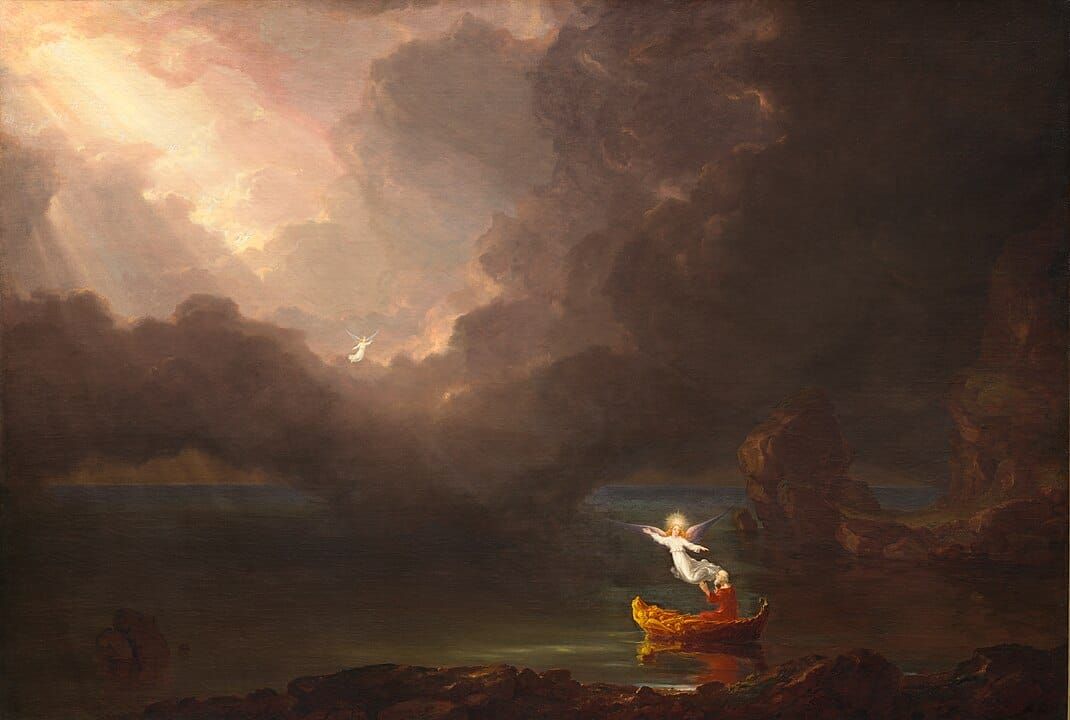
Lux Aeterna. Eternal Light.
The sound of these two words carries something that goes beyond their meaning – a force that cannot quite be explained but can still be felt. Eternity and light. Illumination, truth – perhaps enlightenment too. What could be more powerful in combination? What could be more comforting – and at the same time more frightening?
The phrase comes from the Missa pro defunctis, the Catholic Requiem Mass for the dead. “Lux aeterna luceat eis, Domine” – “May eternal light shine upon them, O Lord.” A prayer for the dead, a plea for peace, for guidance into the unknown. The light at the end of the tunnel. A promise that something still comes after the dark.
Lux Aeterna is not only a promise for the time after death. It is also something that flickers in the middle of life, something we look for while we are still breathing.
It is within us.
I am not religious in the classical sense. Baptized Catholic, like so many people in Austria, but the Church, its dogmas, its rituals – all of that has remained foreign to me. And yet God is not entirely foreign to me. Especially in times of need, when the world becomes too heavy and thinking no longer helps, I notice a longing. A longing to believe in something higher, or at least to want to believe.
Perhaps this is the origin of religions: to have something to hold on to in a world that is hard to understand. The sun that comes and goes, the interplay of day and night. Fire that warms and destroys. Life and death, each the condition of the other. All these primal images became gods, stories, explanations, because there are things that are bigger than the individual human being.
In a way I cannot fully grasp myself, I am a believer after all. I believe in life, in death, in the universe. That is God to me: ourselves, everything around us, us as a community, as part of something bigger. Not an old man with a beard in the sky, but what is – what holds, what connects.
Lux Aeterna belongs to this language. When I hear it, I think of those who stood at graves and did not know how to go on living, who looked for a light to hold on to.
Spoken by mortals. By people who know that nothing is eternal, that bodies decay, that memories fade, that names are forgotten. And still this need to believe that something remains.
But faith is not always light. Sometimes it is only the flicker you look for in the dark.
When I think of light, I think of darkness. One does not exist without the other. You do not become enlightened by picturing radiant figures, but by becoming aware of the darkness – by looking at it, acknowledging it, living through it.
If you have never truly been in the dark, you do not know what light means.
I have been in that darkness. Depression so deep that you no longer see, no longer feel, no longer hope. Suicidal thoughts that are not abstract reflections but a constant, dull knowing: I don’t want to go on, I can’t go on. In those moments there is no eternal light. There is only blackness – a paralyzing, suffocating blackness that devours everything.
It was more than two years ago, a night in December, and I was in the deepest hole of my life.
No contact with my family. Apartment keys lost. Phone dead. It was cold, I was freezing, I didn’t know where to go. I walked through the city, alone, and rang the doorbells of friends – several of them.
Nobody opened the door.
I felt empty, burned out, as if there was nothing left in me, as if everything was lost. Every step through the icy night was heavy. My hands were numb. My breath made little white clouds that vanished at once. I remember the silence – that muffled silence of a winter night, when everyone else is behind their doors, warm and safe, while I stood outside.
I stood by the Danube and thought: There’s no point in anything anymore.
I was ready to go. I didn’t want to go on. The water was black, sluggish, cold, and I stood at the edge and felt nothing but this emptiness, this certainty: This is the end.
But then I saw the lights.
In the windows of the houses along the bank – small, warm rectangles, yellow and soft. Behind them, people. I didn’t know them. They didn’t know I was there. But they were there, they were living, they were awake or they were asleep, and tomorrow they would wake up again. Somewhere someone was cooking. Somewhere someone was watching TV. Somewhere a child was sleeping.
Life was happening. Just like that. Without me. Without knowing that I was standing there.
And something in me – I don’t know what it was, instinct, defiance, a last remnant – said: One more night. Hold on for one more night.
I didn’t go into the water. I went back into the city, sat on steps, froze, waited. The next morning someone finally opened the door. I could feel safe. At last.
That is hope – not the big, radiant hope you wish for, but the small, almost invisible kind that is still enough.
Hope is resilience. The ability not to break completely despite everything – not because you are strong, not because you have a plan, but simply because there is still a tiny remnant that does not give up, that keeps going, that holds on.
What is this light within us?
I believe it is what keeps us alive when reason has long since surrendered. It is not the intellect, not logic, but something older, deeper – the will to live, the urge to keep going, the hope that tomorrow might be different after all.
Our ancestors saw this light in the sun and worshiped it, because they understood that without it no life is possible. They guarded the first fire in the darkness of the caves as if it were sacred, because it was the only thing that lit up the night and drove away the cold. Prometheus, who stole fire from the heavens, became a hero because he brought us light. Fire was life. Fire was God.
We are the light. And we are the darkness. The two belong together.
But we forget this. The light within us gets covered up – by noise, by stress, by expectations, by pain, by everything that has hurt us, everything that makes us believe we are not worth anything.
For a long time I tried to get the light from outside: with alcohol, with substances, with distraction, with numbing. But this artificial light casts no shadows. It shows nothing. It illuminates nothing. It only dazzles.
The real light, the small one that flickers within us, shows the shadows – it shows the cracks, the wounds, the dark corners. And that is exactly why it heals. Because only when we see the darkness can we learn to live with it.
Lux Aeterna is so powerful because it acknowledges both: the light and the darkness. The Mass for the dead is not a cheerful celebration. It is a farewell, a moment in which you acknowledge that someone has died, that something has come to an end.
Death is the darkest thing we know. The absolute limit. The end of all hope, all possibility, all future. We cannot grasp it, not really – we can only know that it is coming.
And still – or precisely because of this – people sing of eternal light. Not to deny death, but to bear it, to find a way to live with the incomprehensible, to keep hope alive even when everything seems over.
The promise: that the light keeps shining. That something remains.
And that is true – not as an immortal soul rising to heaven, but in a very real sense: What we were, what we did, what we left behind in other people lives on. Our light does not go out; it keeps burning in others.
Every person carries the light within. And every person passes it on – through words, through gestures, through presence, through the small moments in which you show someone: You are not alone.
The lights in the windows of strangers. The fact that somewhere life is still happening. The resilience to hold on for one more night, even when there is no reason left.
What is eternal about light is not that it never goes out. What is eternal about light is that it always returns – that there is always someone who lights a candle, who kindles a fire, who opens the door the next morning.
This is not religious hope. This is human experience. It is what carries us, even in the face of death. Not faith in a particular god, not the promise of an afterlife, but the certainty that we are not alone. That we can carry one another, that we can shine for one another as long as we live.
And when we die, when our own light goes out, something still remains: in the people we have touched, in the words we have spoken, in the moments when we were simply there.
That is not immortality. But it is something. It is enough.
Lux Aeterna – eternal light. A reminder that we are the light. That it burns within us even when we do not feel it, and works through us even when we do not see it. That we pass it on even when we believe we have nothing left to give.
The light we are is not eternal.
But as long as we pass it on – it is enough.
Lux Aeterna.
You don’t have to get through the night alone. If you’re thinking about suicide, call, even in the middle of the night, even without the right words. Someone will pick up.
- Austria: TelefonSeelsorge 142 (24/7, free of charge)
- Vienna: social-psychiatric emergency service 01 31 330 (24/7)
- Emergency number across the EU: 112
- USA: 988 Suicide & Crisis Lifeline (call or text)
- UK & Ireland: Samaritans 116 123
- Other countries: findahelpline.com
Originally published in German in October 2025 as “Lux Aeterna – Über das Licht, das wir in uns tragen”. English version by Dorian Rammer, translated with AI assistance.